Salvador Mateo 10-I
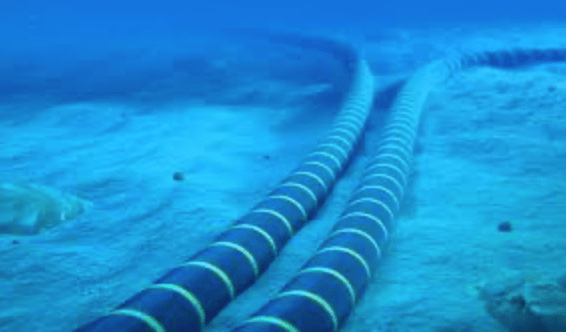
If 95 percent of the world’s data travels beneath the ocean, what would happen if those hidden arteries were suddenly cut?
In our connected world, the Internet often feels “wireless”, accessed instantly with a tap on a phone. But beneath the oceans lies a vast physical network of cables that carry the digital lifeblood of the globe. At any given moment, more than 95 percent of international communications travel through these submarine fiber-optic cables stretching across the sea floor, spanning an estimated 1.48 million kilometers of cable in service across hundreds of separate lines.
These undersea cables are not just technical infrastructure; they are strategic assets that shape global economics, security, and power. As world powers invest in and jockey for influence over their routes, landing points, and protection, submarines, cyber-tools, and diplomacy are increasingly focused on what lies deep beneath the waves.
At first glance, undersea cables are deceptively simple: slender fiber-optic lines, often only as thick as a garden hose, laid on or beneath the ocean floor to transmit data as light signals. Each cable is made of ultra-thin glass fibers, wrapped in protective layers of insulation and steel, that ferry information between continents at incredibly high speeds. Through optical amplification and advanced networking equipment, these fibers transmit email, video, financial transactions, and even defense data across the globe in milliseconds. Satellites actually carry a tiny fraction of international traffic. Submarine cables remain the primary infrastructure of global digital communication.
The cultural historian Nicole Starosielski emphasizes that these cables are not just technical objects but embedded in historical, geographic, and political realities. In her work The Undersea Network, she shows that undersea infrastructure occupies distinct environmental and geopolitical spaces: from remote Pacific beaches where cables land to the ocean trenches they traverse, every segment represents negotiated terrain shaped by power, economics, and colonial legacies.
The physical geography of the earth means that many undersea cables converge in strategic bottlenecks. Narrow straits, continental shelves, and shallow seas create chokepoints where a single break can disrupt traffic between entire regions. The Red Sea and Suez Canal corridor is one such example, where cables connecting Europe, Asia, and Africa converge in close proximity. When cables in the region have been damaged, significant disruptions have occurred in data traffic, showing how a single area can hold disproportionate importance for global connectivity.
These chokepoints also make cables vulnerable to accidental damage, from ship anchors and fishing gear, and to deliberate interference. The concentration of traffic through narrow passages increases the probability of damage and complicates efforts to secure the network.
Concerns over deliberate targeting of submarine cables have grown in recent years, with reports warning that state-backed efforts to tamper with or damage cables may be rising. For example, incidents in the Baltic Sea and around Taiwan have drawn attention to the possibility that powers like Russia and China could exploit undersea infrastructure as part of hybrid warfare or intelligence operations.
Incidents such as repeated cable damage in the Baltic Sea have prompted military responses; NATO launched surveillance missions specifically aimed at protecting this underwater infrastructure. Meanwhile, naval forces have actively monitored suspicious activity around cables linking Europe and North America, illustrating how the defense sector is now explicitly involved in securing communications infrastructure.
Cables are not only vulnerable. They are also points of competition. As nations invest in new submarine cable routes, control over landing stations and network paths becomes an element of digital influence. Developed economies and technology firms often dominate cable funding and management, giving them leverage over data flows that are crucial to economic and strategic interests.
In this context, global tech giants, such as Google, Meta, and Microsoft, have become major investors in undersea cables, both to expand their cloud services and to shape the routes that traffic takes.
At the same time, middle powers seek security in redundancy, building multiple cable paths that avoid politically unstable chokepoints or regions controlled by competitors. The push for “digital sovereignty” in regions like the Indo-Pacific reflects both economic ambition and concern over reliance on networks dominated by rivals.
Undersea cables are already central to geopolitics, but their importance is likely to grow. As technologies like artificial intelligence and 5G increase global demand for high-capacity, low-latency data connections, states and private actors will invest further in cable networks and in securing them against disruption.
Efforts to protect these networks, from international surveillance cooperation to new legal frameworks, are becoming priorities for governments that understand that undersea cables are not invisible infrastructure but vital arteries of the global system.
In a world where data power increasingly equates to geopolitical power, control over the invisible cables connecting continents may be just as important as control of land borders or sea lanes.
References:
(Britannica, 2026) https://www.britannica.com/technology/undersea-cable
(Duke University Press, 2015) https://www.dukeupress.edu/The-Undersea-Network
(Telegeography.) https://www2.telegeography.com/submarine-cable-faqs-frequently-asked-questions
 The Bulldogs' Journal