Maiah rodriguez
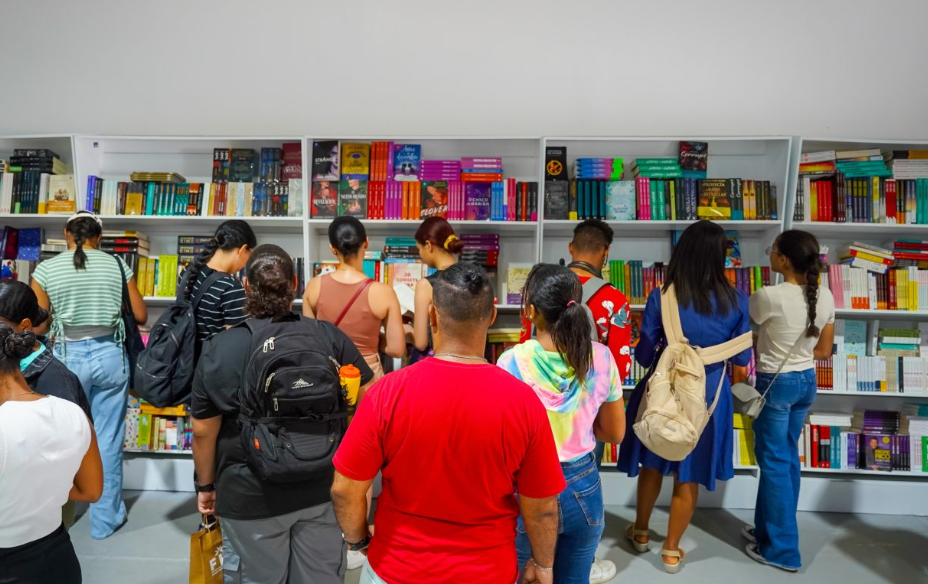
This year’s Santo Domingo International Book Fair, FILSD 2025, was something special. Held from September 25 to October 5 at the Plaza de la Cultura Juan Pablo Duarte, the fair brought together people of all ages who love books, stories, and ideas. What stood out was how much effort organizers put in to make the fair more than just browsing books — it felt like a big cultural gathering that showed reading matters.
Right away, there were things I liked. The fair focused on children’s and young adult literature, which was awesome because young readers got their own spaces, workshops, and activities made just for them. It’s great to see kids being encouraged to read and enjoy stories, not treated like small adults, but really given attention. They also honored historian Frank Moya Pons, which added a sense of respect for Dominican history and identity. There was also a lot going on: more than 600 activities in all. Book presentations, talks, workshops, readings, conferences, even film screenings by the National Cinematheque. So if someone didn’t find something interesting the first day, by day three or four there was something else to check out. The fair had many thematic pavilions, conference rooms, auditoriums, and over a hundred exhibition stands. The scale of it made it feel like a big festival, not just a local event.
Even so, it wasn’t perfect. On the second day, the weather caused some trouble: it rained and some activities had to be paused or adjusted. But despite that, people came out in the afternoons, and vendors said things picked up. Some sales were slow at the start, probably because people were still getting used to the fair and some stands, but many expected sales to rise as the weekend arrived.
Prices of books ranged fairly broadly (between RD$100 and RD$1,000), which made some books affordable, though for others it got pricey depending on the publisher. For people who come just for academic or specialty books, prices might have felt steep. But there were also free programs (“Bonolibro”) and workshops which helped people who might not afford much.
What really made it feel like a success was the sense of community. Families, students, teachers, writers, publishers everyone was mingling. Children could join interactive spaces, young adult readers had panels, older readers could find more serious conferences and book signings. The fair didn’t feel split; it felt inclusive. It was about everyone who loves reading, not just hardcore bookworms.
Another plus was the new features. For example, the Business Room tried to help Dominican authors make connections internationally. A program called Multiplicando Letras included cultural leaders from provinces outside the capital, which helped make the fair less centralized. These additions show that the fair is trying to grow, not stay the same every year.
If I had to point out what could be improved, it would be better planning for weather interruptions (maybe more covered spaces), clearer price tags, and better promotion in some neighborhoods so people farther from the capital know about it and can attend. Also, for some events, the timing overlapped so you had to choose which is normal, but still kind of frustrating.
In sum, FILSD 2025 was a strong success. It showed how much reading and literature still matter in the Dominican Republic. It was fun, inspiring, sometimes chaotic, but mostly uplifting. It felt like something people look forward to — a place where books, ideas, and community meet. I left thinking: if next year is even better, this fair could become even more important in Latin America, not just here at home.
 The Bulldogs' Journal