Could the release of controversial government files really weaken a superpower enough to invite invasion, or is that fear driven more by speculation than reality?
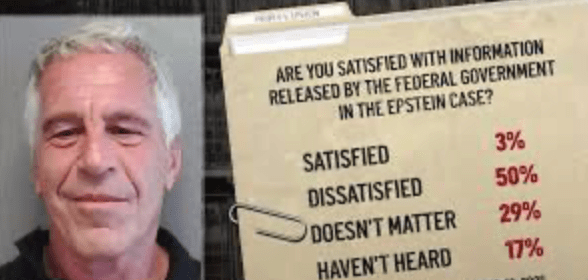
“The public release of documents related to Jeffrey Epstein, often referred to as the “Epstein files,” has sparked intense debate in the United States and abroad. The files include court records, investigative materials, and previously undisclosed information connected to Epstein’s criminal network and associations with wealthy and politically connected individuals. As with many high-profile scandals, the disclosures have fueled speculation online. One dramatic claim circulating in some corners of the internet is that the release could make the United States vulnerable to invasion.
While the controversy has serious political implications, the idea that it could lead to a foreign invasion is not grounded in geopolitical reality.
The Epstein files are primarily a domestic legal matter. They concern criminal investigations, accountability, and questions about how powerful individuals may have avoided scrutiny for years. The release of such records can affect public trust, political reputations, and institutional credibility. However, none of these outcomes inherently create military vulnerability.
Nations do not invade other countries because of scandals, even large ones. Military action is typically driven by strategic interests such as territory, security threats, natural resources, or regional dominance. Court documents and political embarrassment do not meet those criteria.
It is true that international perceptions of the United States have fluctuated in recent years. Research conducted by the Pew Research Center found that global confidence in U.S. leadership declined in multiple countries, particularly during the presidency of Donald Trump.
Declining global approval can influence diplomacy, trade agreements, and alliances. It may affect negotiations or cooperation on international issues such as climate policy, defense spending, or economic partnerships. However, negative public opinion does not translate into military aggression. Countries may criticize or distance themselves diplomatically, but launching an invasion of U.S. territory would be an entirely different and far more extreme action.
One of the strongest reasons invasion fears are unrealistic is the United States’ military capacity. The U.S. maintains the most advanced and well-funded military in the world. It has extensive naval power, global air superiority capabilities, sophisticated missile defense systems, and nuclear deterrence. In addition, the U.S. has defense alliances through NATO and security partnerships across Asia and other regions.
For another country to attempt an invasion of the U.S. mainland would require enormous military capability, logistical coordination across oceans, and a willingness to risk devastating retaliation. Even the most powerful nations would face catastrophic consequences for such an attempt. The strategic cost would vastly outweigh any conceivable benefit.
Modern international relations operate within a framework of treaties and legal norms. Invasion of a sovereign nation without provocation or authorization from international bodies such as the United Nations is considered an act of aggression. Such actions typically result in severe economic sanctions, global condemnation, and possible coalition responses.
A domestic political scandal, even one involving powerful elites, does not provide legal or moral justification for foreign military intervention. The Epstein files, controversial as they may be, fall squarely within the category of internal governance issues.
So why does the idea persist online? Large scandals often generate uncertainty, distrust, and emotional reactions. When people feel that institutions have failed, some may assume that broader instability will follow. Social media can amplify extreme scenarios because dramatic claims attract attention.
Additionally, geopolitical tensions already exist between major world powers. When trust in leadership declines or internal divisions become visible, some observers speculate that adversaries might exploit weakness. However, “exploiting weakness” in the modern world usually refers to cyberattacks, misinformation campaigns, or economic competition, not tanks landing on American shores.
While invasion is not a realistic risk, the release of the Epstein files may still have meaningful effects. These could include:
Greater public scrutiny of political and business elites, Renewed debates about transparency and accountability, Shifts in voter behavior or party dynamics, Changes in how other nations perceive U.S. political stability
International reputation does matter. A decline in perceived integrity can reduce diplomatic influence, sometimes called “soft power.” But soft power erosion leads to diplomatic friction, not military conquest.
The release of the Epstein files is politically significant and socially consequential, but it does not create conditions that would make the United States vulnerable to invasion. Military invasions are driven by strategic objectives and power calculations, not by scandal-driven embarrassment or public distrust.
While global opinion of the United States may fluctuate and political debates may intensify, the structural realities of military deterrence, international law, and global alliances make an invasion scenario extraordinarily implausible. Understanding the difference between political controversy and geopolitical threat helps separate legitimate concerns about governance from exaggerated fears about national security.
References:
(BBC, 2026)https://www.bbc.com/news/videos/cd9e3nzzw3zo
(Pew research center, 2025)https://www.pewresearch.org/global/2025/06/11/us-image-declines-in-many-nations-amid-low-confidence-in-trump/
(Quora)https://www.quora.com/What-do-people-in-other-countries-think-about-Donald-Trump
 The Bulldogs' Journal