——————————————————
——————————————————
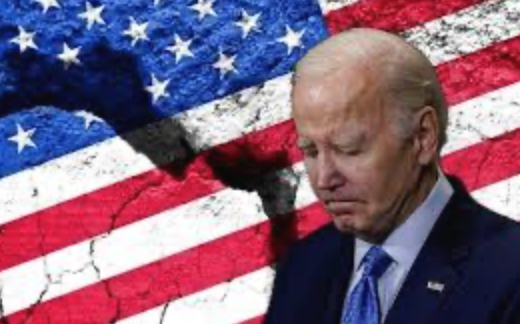
For nearly 80 years, the United States has stood at the center of the global order shaping alliances, policing trade routes, deterring rivals, and defining what power looks like in the modern world. But today, that dominance feels less certain. From rising challengers like China to strained alliances and growing domestic division. This uncertainty is why many experts now argue that the United States is no longer the world’s only superpower.
For nearly 80 years, the United States has stood at the center of the global order, shaping alliances, policing trade routes, deterring rivals, and defining what power looks like in the modern world. From the end of World War II through the Cold War and into the post-9/11 era, America was not just powerful; it was dominant. But today, that dominance feels less certain. Rising competitors, shifting economic power, and internal political divisions have sparked a growing debate: Is the United States losing global influence? The answer depends on how influence is defined, and whether global power today looks the same as it did in 1945 or even 1991.
After the collapse of the Soviet Union in 1991, the United States emerged as the world’s sole superpower. It had unmatched military capabilities, the largest economy, technological leadership, and a vast network of alliances through NATO and partnerships across Asia. This period is often described as a “unipolar moment,” where no other country could seriously challenge U.S. dominance.
However, according to Dennis Ross, the world has shifted away from that unipolar structure. The United States is still extraordinarily powerful, but it is no longer the world’s only superpower. China’s rapid economic and military growth has fundamentally altered the balance of power. Beijing has expanded its navy, invested heavily in advanced technologies, and increased its global economic footprint. Meanwhile, Russia continues to assert itself militarily, and regional powers such as India and Turkey pursue more independent foreign policies.
Ross argues that American influence has not disappeared but it must now operate in a competitive environment rather than a dominant one. In other words, the United States is still powerful, but it must persuade and compete more than it commands.
Thomas Piketty offers a more critical view, suggesting that the United States is gradually losing control of the global economic system it helped build. After World War II, American leadership shaped institutions such as the International Monetary Fund, the World Bank, and global trade structures. The U.S. dollar became the world’s reserve currency, giving Washington enormous financial leverage.
Today, however, the global economy is more distributed. China rivals the United States in GDP when measured by purchasing power parity. Emerging economies are forming new financial institutions and trade partnerships that reduce reliance on Western systems. Some countries have even explored alternatives to dollar-dominated trade.
Piketty emphasizes that economic inequality and domestic political polarization within the United States also weaken its global credibility. When democratic institutions appear unstable or divided, it becomes harder for the U.S. to present itself as a model for governance. Influence is not just about military strength it also depends on economic stability, institutional trust, and moral authority.
Despite economic competition, the United States maintains the most capable military in the world. It spends more on defense than any other nation and operates hundreds of overseas bases. Its alliances remain extensive, especially in Europe and the Indo-Pacific.
However, military dominance today is more complex. China has developed advanced missile systems designed to challenge U.S. naval power in the Pacific. Cyber warfare and artificial intelligence have created new domains where smaller or less wealthy states can compete asymmetrically. Additionally, two decades of counterterrorism wars strained American resources and public support for foreign intervention.
Some analysts argue that these prolonged conflicts reduced U.S. credibility and diverted attention from emerging great-power competition. As a result, influence that once seemed automatic now requires strategic recalibration.
One of America’s greatest strengths has historically been its alliances and soft power, its cultural appeal, educational institutions, technological innovation, and democratic ideals. Even when rival powers rise, few can match the global reach of American media, universities, and private sector influence.
Yet alliances are not static. European states increasingly discuss “strategic autonomy,” seeking greater independence in defense and energy policy. Asian allies hedge between Washington and Beijing, balancing economic ties with security commitments. This does not necessarily mean abandonment of the United States, but it does signal a more flexible and multipolar diplomatic environment.
Soft power also depends on perception. Political instability, domestic unrest, or inconsistent foreign policy messaging can weaken the image of reliability that underpins long-term partnerships.
The debate ultimately hinges on perspective. If global influence is defined as uncontested dominance, then yes, the United States no longer occupies that position. The era of being the sole superpower has ended. China’s rise and broader economic multipolarity ensure that power is more distributed than it was three decades ago.
However, if influence is measured by military capacity, alliance networks, technological leadership, and economic weight, the United States remains one of the most powerful actors in modern history. It still shapes global trade rules, leads key security coalitions, and drives innovation in industries ranging from artificial intelligence to biotechnology.
Rather than losing influence outright, the United States may be experiencing a transition: from singular dominance to competitive leadership. In a multipolar world, influence is not imposed — it is negotiated, maintained, and constantly tested.
The United States is not collapsing as a global power, but it is no longer operating in a world where its supremacy is unquestioned. Rising competitors, economic shifts, and domestic challenges have altered the landscape of international politics. As Dennis Ross suggests, America must adapt to a world where it is a superpower among others. And as Thomas Piketty argues, maintaining influence requires addressing structural economic and political weaknesses at home.
The question is not whether the United States still matters. It does. The real question is whether it can redefine leadership in an era where power is shared, contested, and constantly evolving.
——————————————————
References:
(Dennis Ross, 2025)https://www.washingtoninstitute.org/policy-analysis/heres-why-us-no-longer-worlds-only-superpower
(Thomas Piketty, 2025)https://www.lemonde.fr/en/opinion/article/2025/04/12/thomas-piketty-the-reality-is-the-us-is-losing-control-of-the-world_6740140_23.html
(americanProgress, 2026)https://www.defensepriorities.org/qa/war-on-terror-tactics-wont-stop-mexican-drug-cartels/
 The Bulldogs' Journal