Salvador Mateo 10-I
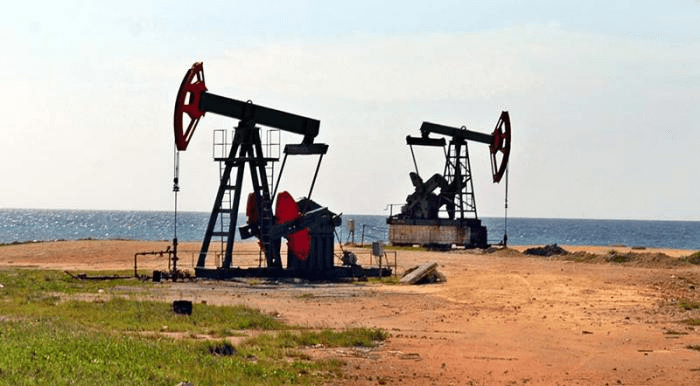
Cuba craves oil because its life depends on it (literally).
For more than six decades, Cuba’s political and economic trajectory has been shaped by revolutionary ideology, Cold War alliances, and persistent economic hardship. From Fidel Castro’s rise in 1959 to today’s energy crisis, the island’s relationship with oil has been central to its survival and now, as Cuba faces severe fuel shortages and escalating geopolitical pressure, that reliance has become a defining vulnerability.
Following the Cuban Revolution in 1959, Cuba’s economy was reorganized along socialist lines under Fidel Castro’s leadership. Land, industry, and commerce were nationalized, and the state took direct control of economic planning. As diplomatic ties with the United States broke down, formally severed in 1961, Cuba gravitated toward the Soviet Union for political, military, and economic support.
That alliance fundamentally reshaped Cuba’s energy profile. Under agreements like Petrocaribe, Venezuela became Cuba’s primary oil supplier from the late 1990s onward, sending crucial crude at favorable terms in exchange for services such as medical personnel, a relationship later replicated with other friendly states. At its peak, Venezuela supplied tens of thousands of barrels of oil daily, helping Cuba generate electricity, fuel transportation, and manage basic industry.
This external support, however, masked deeper structural weaknesses: Cuba lacked a diversified energy strategy and maintained an aging fleet of oil-fired power plants that were never fully modernized.
By late 2025 and into 2026, Cuba’s precarious energy balance began to unravel. Fuel imports from Venezuela, already strained by that country’s economic struggles, were cut off entirely after sustained U.S. pressure and geopolitical interventions targeting Caracas. According to energy analysts, the disruptions to Venezuelan oil, once the backbone of Cuba’s energy supply, left Havana scrambling for alternatives.
In the absence of consistent Venezuelan shipments, Cuba turned to Mexico as a key supplier. Petroleros Mexicanos (Pemex) stepped in to provide crude oil and fuel, at times becoming Cuba’s largest external source. Still, this support was uneven: imports from Mexico declined sharply, dropping by around 73% in 2025 compared with the previous year and leaving Cuba with far less fuel than needed to sustain normal economic and social activity.
The economic impact was immediate. Liquid fuels like diesel are essential for public transportation, water pumping, industrial generators, and electricity production. Without sufficient imports, Cuba’s already fragile grid began to falter, leading to frequent and prolonged blackouts that have affected large portions of the country, sometimes lasting more than 12 hours per day.
The fuel shortages have translated rapidly into hardship for ordinary Cubans. Power outages disrupt hospitals, schools, and basic services. Transportation systems grind to a halt, and businesses struggle to operate without reliable energy. Citizens have been forced to adapt: cooking over charcoal, storing water in anticipation of outages, and coping with disruptions to food refrigeration and communications.
Cuba’s government has responded with rationing plans and public appeals for resilience, emphasizing that the crisis is temporary and urging national unity. But the scale of the challenge, rooted in both external geopolitical dynamics and long-standing internal inefficiencies, casts doubt on how quickly normalcy can be restored.
The crisis is not purely domestic; it reflects escalating geopolitical tensions, particularly with the United States. In early 2026, U.S. policymakers imposed measures designed to choke off Cuba’s access to oil supplies. This includes threats of tariffs on countries that sell crude to Cuba and diplomatic pressure discouraging oil exports to the island. Reuters reported that President Donald Trump, in office at the time, stated that Mexico would stop sending oil to Cuba under U.S. pressure, a move that could deepen the shortages.
These actions have drawn criticism from Cuban officials, who denounce them as aggressive and punitive. President Miguel Díaz-Canel described efforts to limit fuel supplies as attempts to “strangle the Cuban economy.”
At the same time, Mexico’s leadership has faced a complex balancing act. President Claudia Sheinbaum has pledged humanitarian aid to Cuba and expressed a willingness to explore options for continuing fuel assistance, even as the United States pressures Mexico to limit such support. The Guardian reported that she insisted Mexico never formally agreed to halt oil shipments at the U.S. behest and affirmed her intention to assist the Cuban people.
Meanwhile, other global powers have voiced support for Cuba’s sovereignty. Russia reaffirmed its commitment to continue supplying oil despite U.S. pressure, and China publicly backed Cuba against “external interference” although such statements stopped short of guaranteeing large fuel transfers. These overtures underscore Cuba’s strategic role in broader international rivalries, where energy access becomes intertwined with diplomacy.
Beyond geopolitics, Cuba’s oil dilemma reveals systemic issues that have long hindered its development. Decades of centralized planning, limited investment in infrastructure, and reliance on a narrow set of external partners have left the country vulnerable to shocks. The aging energy grid, combined with shortages of foreign currency for fuel purchases, has amplified the crisis.
Experts argue that without substantial diversification of energy sources, including renewable investments and improved efficiency, Cuba will remain susceptible to similar crises in the future. The island’s craving for oil, born of necessity and reinforced by decades of external dependencies, illustrates how deeply energy is woven into the fabric of Cuban social and political life.
References:
(Communist crimes, 2026.) https://communistcrimes.org/en/countries/cuba
(Office of the historian, 2026.)
(Sass, 2026.)
https://www.dw.com/en/cuba-in-crisis-amid-fuel-shortages-ongoing-blackouts/g-75806823
(theguardian, 2026) https://www.theguardian.com/world/2026/feb/02/claudia-sheinbaum-mexico-oil-cuba-trump
 The Bulldogs' Journal