Mila Ho 9-ll
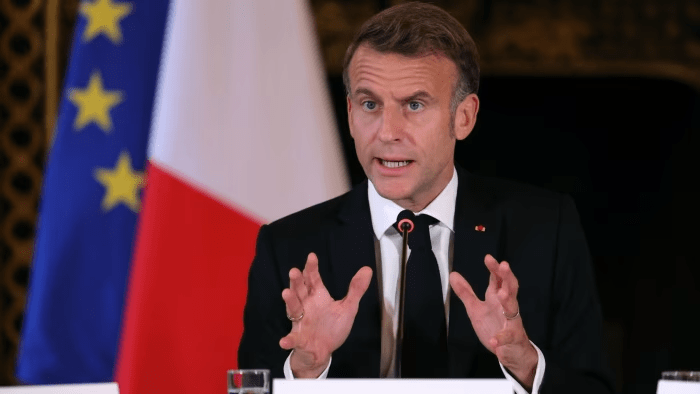
French President Emmanuel Macron is pushing to fast-track legislation banning social media use for children under 15, citing concerns over mental health, online safety, and the manipulation of young users by digital platforms. The proposal follows similar measures abroad and reflects growing international efforts to protect children in the digital age.
French President Emmanuel Macron has announced plans to fast-track legislation that would ban children under the age of 15 from using social media, aiming for the measure to take effect by the start of the next school year in September. The proposal reflects growing concern in France and across Western democracies about the impact of social media on young people’s mental health, emotional development, and safety online.
In a video released late Saturday by French broadcaster BFMTV, Macron delivered a strong message defending the need for urgent action. “The brains of our children and teenagers are not for sale,” he said. “Their emotions are not for sale or to be manipulated, neither by American platforms nor by Chinese algorithms.” Macron confirmed that he had asked his government to activate an accelerated legislative procedure so the bill could be examined and passed by Parliament in time for implementation this fall.
The French proposal would not only prohibit under-15s from accessing social media platforms, but would also ban mobile phones in high schools. According to Macron, the rules are intended to be simple and unambiguous. “This is a clear rule—clear for our teenagers, clear for families, clear for teachers,” he said. The legislation is being sponsored by Laure Miller, a lawmaker from Macron’s Renaissance party, and is scheduled to be debated in a public parliamentary session.
A key element of the proposed law is stricter age verification. Miller has emphasized that current systems are ineffective, as users can simply enter a false date of birth to access social media platforms. By strictly enforcing the European Union’s Digital Services Act, France aims to require platforms to implement real and verifiable age checks. While acknowledging that no system is completely foolproof, Miller argues that stronger enforcement would represent a significant step toward protecting minors online.
The French government’s push comes amid mounting evidence of the potential harms associated with excessive social media use among young people. According to France’s health watchdog, nearly 90% of children aged 12 to 17 use smartphones daily to access the internet, with more than half using them primarily for social networks. One in two teenagers reportedly spends between two and five hours a day on their phone. Health authorities have linked heavy social media use to reduced self-esteem, anxiety, and increased exposure to content related to self-harm, drug use, and suicide. Several families in France have already filed lawsuits against TikTok, claiming the platform exposed their children to harmful material connected to teen suicides.
France is not alone in considering such measures. Macron’s announcement followed statements from the British government indicating it is exploring a possible ban on social media for under-16s as part of broader online safety reforms. However, the most prominent precedent comes from Australia, which introduced a nationwide ban on social media use for children under 16 in December. Under the Australian law, responsibility falls on technology companies rather than parents, with platforms facing penalties if underage users remain active.
Since Australia’s ban took effect, approximately 4.7 million social media accounts identified as belonging to minors have been removed. Meta reported deleting nearly 550,000 under-16 accounts in a single month, including hundreds of thousands on Instagram and Facebook. While some platforms have complied, others have pushed back. Reddit has launched a legal challenge against the Australian government, and several tech companies have warned that such bans could isolate vulnerable children or drive them toward unregulated online spaces.
Despite criticism from the tech industry, supporters of the French proposal argue that decisive action is overdue. Clara Chappaz, France’s Ambassador for AI and Digital Affairs, described the upcoming parliamentary vote as a major moment for the country. She noted that Macron has spent more than a year consulting scientists to assess the mental health impact of social media on children. One of the central recommendations from that scientific coalition was a firm ban on social media for those under 15.
Australia’s experience has also influenced French policymakers. Chappaz suggested that if enough countries adopt similar rules, the structure of the internet itself could begin to change. “The president has been pushing a strong idea,” she said, “making sure our children stay children and enjoy real life before they are exposed to social media.”
As France moves closer to a final vote, the proposed ban has become part of a broader international debate over child protection, digital responsibility, and the power of global technology platforms. Whether the law ultimately reshapes online behavior or sparks further controversy, it signals a clear shift toward stricter regulation of social media in the name of safeguarding young minds.
 The Bulldogs' Journal