Mila Ho 9-ll
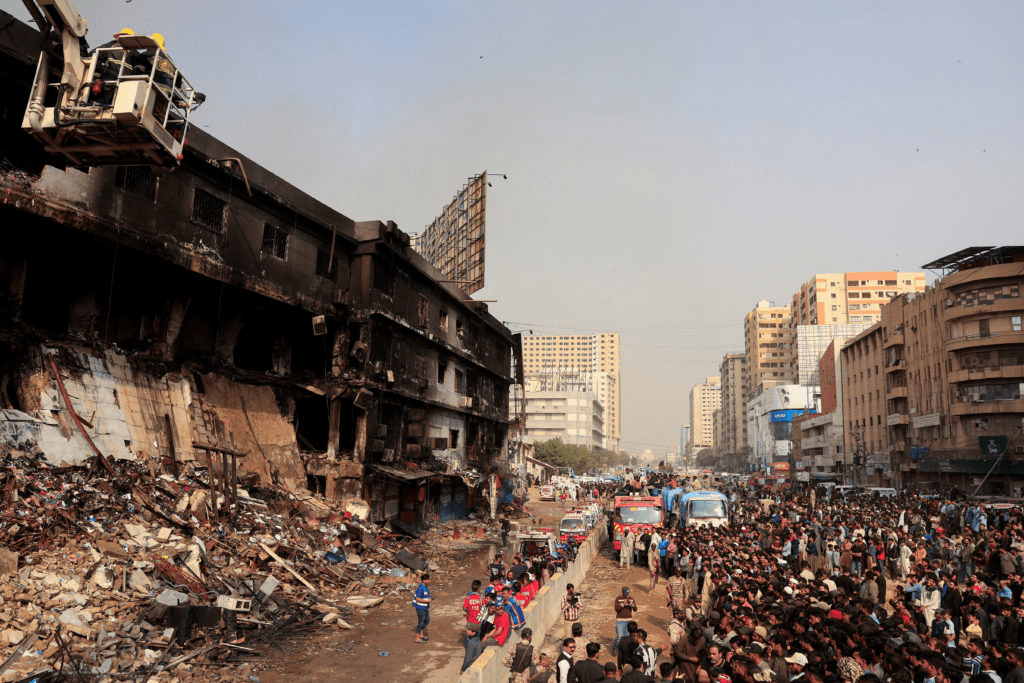
A massive fire at Karachi’s Gul Plaza killed at least 21 people and left dozens missing, exposing serious safety failures and delays in emergency response. As families grieve and search for loved ones, the tragedy has sparked public anger and renewed calls for accountability and reform.
Karachi is reeling after a massive fire tore through Gul Plaza, a large shopping mall in the city’s historic Saddar area, killing at least 21 people and leaving more than 60 still missing. The blaze, which began late Saturday night, has become the deadliest fire in the city in over a decade and has sparked outrage over building safety, emergency response, and government accountability.
Gul Plaza, a multi-storey complex housing around 1,200 shops, was a bustling wholesale market known for affordable wedding clothing, toys, decorations, and household goods. On Saturday evening, the mall was crowded with shoppers preparing for weddings and upcoming events. What began as a reported fire in ground-floor shops quickly escalated into an uncontrollable inferno.
According to rescue services, authorities received the first emergency call at 10:38 p.m. By the time firefighters arrived, flames had already spread to the upper floors. The fire raged for more than 24 hours, fueled by dense shop layouts, flammable materials, and poor ventilation. Thick black smoke rapidly filled the building, trapping people inside and making escape nearly impossible for many.
Survivors described moments of panic and confusion. Shoaib, a 19-year-old shop worker, said he heard warnings about a fire downstairs but did not initially realize the danger. Within minutes, smoke covered everything. “People were running everywhere,” he said. One exit he tried was locked, and the crowds were too dense to move through others. He eventually fainted and was pulled out by someone he does not know. A colleague who tried to escape with him is still missing.
Authorities later confirmed that most of the mall’s exits were locked at the time of the fire, as the building was nearing closing time. Out of 16 exits, only three were open, according to police. This detail has intensified public anger and raised serious questions about safety regulations and enforcement.
As the fire was brought under control on Monday, rescue teams began the grim task of pulling bodies and human remains from the smoldering debris. Many of the remains were so badly burned that they had to be placed in sacks and sent for DNA testing. Rescue workers, exhausted and exposed to intense heat, paused frequently to drink water as cranes cleared twisted metal, fallen signboards, and collapsed structures. By Monday afternoon, most of the building had crumbled, and authorities ordered the remaining structure demolished due to the risk of collapse.
For families waiting nearby, the uncertainty has been unbearable. Qasir Khan said his wife, daughter-in-law, and her mother went to the mall Saturday evening and never returned. “The bodies will come out in pieces,” he said bitterly, blaming delays in rescue efforts. Kosar Bano, whose six relatives went shopping for a wedding, said the last message she received was that they would be home in 15 minutes. “The only hope we have now,” she said, “is how many hands or fingers we will find.”
The tragedy has also devastated shopkeepers. Yasmeen Bano, who had worked at Gul Plaza for two decades, said everything she owned was destroyed overnight. “We’ve been reduced to zero,” she said. Hundreds of shopowners gathered near the site, watching as smoke rose from what remained of their livelihoods.
Officials have offered condolences and promised action. Sindh Chief Minister Murad Ali Shah confirmed that at least 65 people were still missing and acknowledged serious faults in the handling of the disaster. “An inquiry will be conducted and heads will roll,” he said, though he admitted the exact cause of the fire is still unknown. While police initially suggested an electrical fault, authorities say all possibilities remain under investigation.
Prime Minister Shehbaz Sharif expressed solidarity with the victims and their families, but his statement did little to calm public anger. When Karachi Mayor Murtaza Wahab visited the site, he was met with chants and protests accusing the government of negligence and slow response. Many residents believe that quicker action by firefighters could have saved lives.
The fire has reignited painful memories of past disasters in Karachi, including a 2012 factory fire that killed more than 260 people. Despite repeated tragedies, critics say little has changed in terms of building safety, fire preparedness, and urban governance. Lawmakers across Pakistan have now called for sweeping reforms, urging stricter enforcement of safety codes, regular inspections, and accountability for violations.
As rescue operations continue, hope is fading for families still searching for loved ones. The air around Gul Plaza remains thick with smoke and grief, and the ruins stand as a stark reminder of the human cost of neglect. For many in Karachi, the question is no longer how this happened, but how many more lives must be lost before meaningful change finally comes.
SOURCES
 The Bulldogs' Journal