By Rene Chang [November 15, 2025]
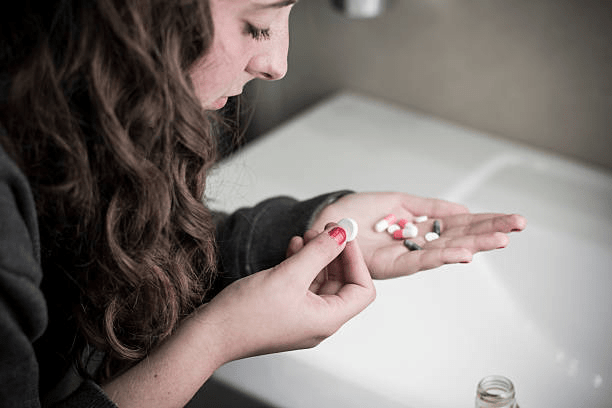
In 2025, the issue of whether kids are overmedicating for mental health issues is complicated and highly debated. Evidence shows that teenagers, more specifically Gen Z, are receiving more medication mainly due to a significant and concerning increase in teenage depression, anxiety, and self-harm. Further, data shows that several teenagers use excessive pharmaceutical medications to cope with these mental challenges.
According to WHO, “Globally, one in seven 10-19-year-olds experiences a mental disorder, accounting for 15% of the global burden of disease in this age group.” Teens with mental health issues are especially exposed to stigma, discrimination, social exclusion, educational challenges, risk-taking behaviors, physical illness, and human rights violations.
Compared to other generations, younger generations—especially Gen Z—are more willing to ask for help and are more open about mental health issues. Prescription rates are rising as a result of more illnesses being professionally identified and treated due to increased awareness and decreased stigma. Evidence in 2021-2023 from the CDC proves that more than half (55%) of U.S. adolescents reported discussing their mental and emotional health with a health care professional.
Additionally, financial considerations come into play; people may generally lean more towards prescription medication than talking therapies because they are more budget-friendly. In certain cases, insurance covers shorter medication management appointments more than longer “talking therapies,” creating a financial incentive for medication over therapy.
The CDC presents data from 2021-2023 in the U.S., which show that 16% of adolescents reported taking any prescription medication to help with their emotions, concentration, behavior, or mental health. Furthermore, according to the Stanford Report, “As of 2022, about 4.5% of U.S. adolescents and young adults, ages 12 to 25, had received a prescription for antidepressant medication. Antidepressant prescriptions have been on the rise for all age groups in the U.S. over the past decade; those rates increased even faster in the early months and years of the COVID-19 pandemic for adolescent girls and young women, especially.”
Despite not having FDA approval for use in children and adolescents, many psychotropic drugs are still prescribed “off-label.” Although this is a typical and frequently essential medical procedure, it highlights the lack of long-term safety data for this particular age group.
The placebo effect is a strong variable in the overmedication debate because trials for teen mental health often show a strong response to placebos. In other words, it means that much of the improvement may come from the expectation of healing and the act of receiving care, not just the drug’s chemicals.
The overmedication debate is an important check and balance in 2025. It motivates medical professionals to carefully consider the advantages and disadvantages for each patient, ensure that a diagnosis is correct, prioritize therapy, while staying cautious for any negative effects. Whether or not medication is used, the priority must be on making sure that every teenager receives the appropriate care at the appropriate time. Many teenagers with mental health issues do not receive the proper care, including psychosocial therapies, even with an increase in prescriptions. Medication may be the first or only treatment offered rather than part of a multifaceted approach due to the ease of writing a prescription compared to the burden of getting high-quality, specialized therapy (due to cost, availability, or long wait times).
Bibliography:
- https://mtppsychiatry.com/elementor-30414/#:~:text=Conclusion,that%20requires%20immediate%20global%20focus.
- https://insights.taylorduma.com/post/102hvx9/are-we-overmedicating-anxious-and-depressed-teenagers#:~:text=A%20recent%20investigative%20report%20raises,problem%20that%20needs%20professional%20attention.
- https://www.theguardian.com/society/2015/nov/21/children-who-grow-up-on-prescription-drugs-us
- https://www.urmc.rochester.edu/encyclopedia/content?contenttypeid=1&contentid=4240#:~:text=Reasons%20for%20use,or%20simply%20to%20get%20high.
- https://pmc.ncbi.nlm.nih.gov/articles/PMC11651023/
- https://www.apa.org/news/press/releases/2019/03/mental-health-adults
- https://news.stanford.edu/stories/2025/07/antidepressants-kids-teens-science-research#:~:text=Antidepressant%20prescriptions%20have%20been%20on,girls%20and%20young%20women%2C%20especially.
- https://www.health.harvard.edu/newsletter_article/the-power-of-the-placebo-effect
- https://pmc.ncbi.nlm.nih.gov/articles/PMC2100041/#:~:text=This%20article%20considers%20prescribed%20psychotropics,about%20their%20long%2Dterm%20impact.
 The Bulldogs' Journal