By Sein Lee, 10th grade.
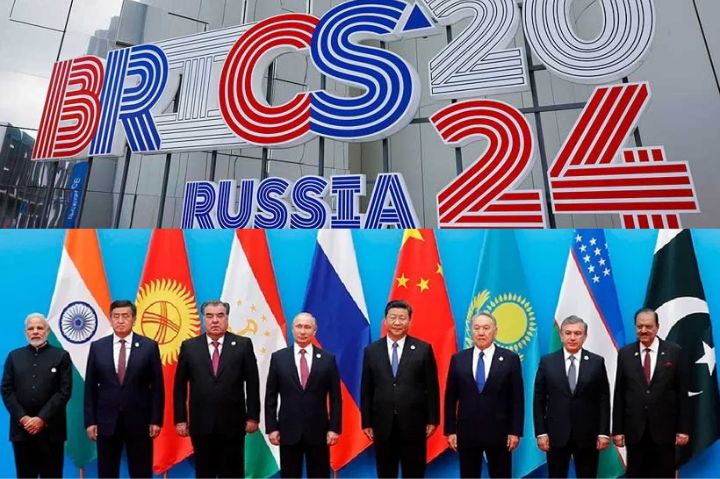
The BRICS summit, which has doubled in size and is centered around non-Western countries, was held in Kazan, Russia for three days from the 22nd. With countries from the Middle East and North Africa, as well as Southeast Asia, joining as new members, attention is focused on whether this will add momentum to non-Western powers challenging the US-centered world order.
The AP reported on the 21st that this year’s BRICS summit will be attended by leaders of major non-Western countries, including Russian President Vladimir Putin, Chinese President Xi Jinping, Indian Prime Minister Narendra Modi, Turkish President Recep Tayyip Erdogan, and Iranian President Masoud Pesheshkian. The Russian Kremlin said that 32 countries responded to the invitation to this summit, and that 24 of them will participate at the summit level. BRICS, a consultative body that started in 2006 with emerging economic powers Brazil, Russia, India, and China, was joined by South Africa in 2009, and Saudi Arabia, the United Arab Emirates, Iran, Egypt, and Ethiopia are joining this year. Russia claimed that BRICS, with its additional members, will account for 37.4% of global GDP in 2023.
Neighboring countries are focusing on whether BRICS will further expand the scope of the non-Western alliance. The governments of Thailand and Malaysia, both Southeast Asian countries, officially announced their intention to join BRICS in June. Turkey, a member of the North Atlantic Treaty Organization (NATO) that has been at odds with Russia over the Ukraine War, is also known to have applied to join BRICS in September. President Putin made it clear that the summit would discuss the possibility of additional member states, saying, “We will consider whether other countries, including the 30, are ready to participate in the BRICS agenda in some form.”
The expansion of BRICS aims to strengthen its position in the ‘Global South’. In particular, Russia and China, which lead BRICS, are arguing that we should move away from the US-centered world order and pursue multilateralism and a multipolar system amid the Ukraine War and the US-China hegemony conflict. The two countries that share the same position are becoming closer. Including this summit, President Putin and President Xi will meet three times this year.
There are also voices of concern about this movement. In a report released on the 9th, Stuart Patrick, a senior fellow at the Carnegie Endowment for International Peace, stated that “the emergence of BRICS+ suggests that the world is being divided as geopolitical competition between the East and the West intensifies and the South and the North alienate each other,” and that “Beijing and Moscow are trying to strengthen anti-Western forces.” In response to this view, President Putin said at a meeting on the 18th, “BRICS shares the position that it is not anti-Western but anti-Western.”
Whether or not to add members depends on whether the internal differences within BRICS are successfully coordinated. India and Brazil, which are wary of an “anti-Western” position, are known to have been cautious about expanding the membership at last year’s summit. This meeting also discussed establishing a payment system among member countries to reduce dependence on the US dollar in response to economic sanctions from the West.
Bibliography:
Financial cooperation and BRICS expansion are on the table as Putin hosts Global South leaders | AP News. (2024, October 24). AP News. https://apnews.com/article/russia-putin-brics-summit-china-india-d672be9b1ec2ffd0fba608e8a6aca790
Russian president claims BRICS outdid G7 by share of global GDP. (October 19, 2024). https://www.aa.com.tr/en/europe/russian-president-claims-brics-outdid-g7-by-share-of-global-gdp/3366855#:~:text=Putin%2C%20at%20a%20plenary%20session,Group%20of%20Seven%20is%2029.3%25
Patrick, S. (October 9, 2024.). BRICS expansion, the G20, and the future of world order. Carnegie Endowment for International Peace. https://carnegieendowment.org/research/2024/10/brics-summit-emerging-middle-powers-g7-g20
 The Bulldogs' Journal