By Sein Lee, 10th grade
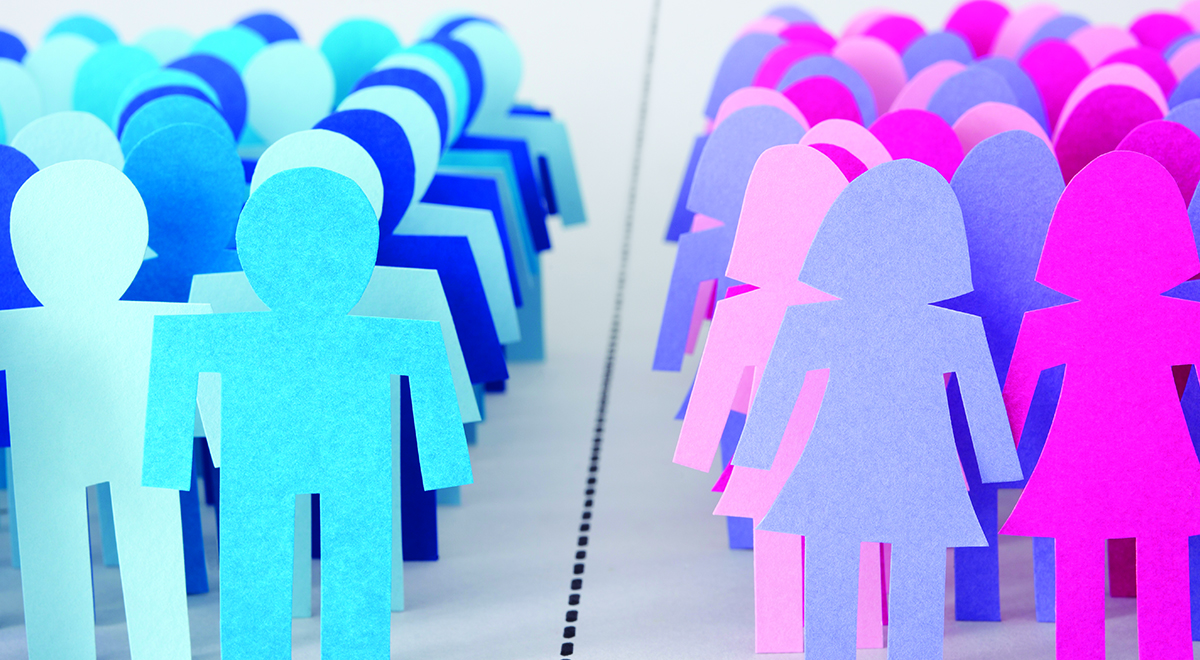
There are a series of diagnoses that the ideological gap between Generation Z men and women around the world is deepening. There are also growing concerns about the resulting gender conflict.
According to the Guardian, in a survey of 3,600 people conducted by the polling agency Ipsos on behalf of the Policy Research Institute at King’s College London and the Global Women’s Leadership Institute, one in four British men aged 16 to 29 responded that “it is harder to live as a man than as a woman.””
In addition, one in six Generation Z men responded negatively to feminism, saying that “” feminism has more disadvantages than advantages.”” This figure is higher than the response rate for the same answer from baby boomer men in their 60s or older.
Attitudes toward celebrities are also divided
Gender differences are also revealed in attitudes toward certain influencers and celebrities. Andrew Tate, a British American who calls himself a misogynist, is an influencer with 8.7 million followers. One in five British Gen Z men who have heard of him said they view him favorably.
Among the best-selling author and Canadian psychologist Jordan Peterson, who is said to represent ‘demoralized’ young men, 32% of men aged 16-29 viewed him favorably. In contrast, only 12% of women of the same age viewed him favorably.
Bobby Duffy, director of policy research at King’s College London, told the Guardian that this was a new and unusual generational pattern, and that it suggested the rising generation was at risk of being divided. Rosie Campbell, director of the Institute for Women’s Leadership, said part of the explanation is that women groups get most of their information first from social media. Rosie Campbell said “young women feel they can have a feminist identity, ingesting a lot of information about ‘girl power,’ ‘but at this stage in their lives they don’t understand the inequalities that exist in the world.”
The insights from Bobby Duffy and Rosie Campbell underscore the complexities of the ideological divide within Generation Z. Duffy’s observation about the unusual generational pattern highlights the risk of fragmentation among young people, which could lead to increased polarization. Campbell’s emphasis on social media as a primary information source for young women reveals a critical gap in understanding the broader societal inequalities they face. This disconnect may contribute to the divergent views on feminism and gender issues, suggesting that while young women are eager to adopt feminist identities, they may lack a nuanced perspective on the challenges that persist. As these dynamics evolve, it becomes increasingly important to foster dialogue that bridges these gaps and promotes a more comprehensive understanding of gender equality among both men and women.
Support for far-right parties is higher among men.
Earlier, the Financial Times also pointed out the differences between men and women in Generation Z in a column titled “A New Global Gender Gap Is Emerging” written by data analysis expert John Burn Murdoch on the 26th of last month.
According to a Gallup poll in the United States, women aged 18 to 30 are 30 percentage points more progressive than men of the same generation. In Germany, there was also a 30 percentage point gap between conservative young men and progressive women, and a 25 percentage point gap in the UK.
In the US, UK, and Germany, young women took much more progressive positions on immigration and racial justice than young men. In Germany in particular, young men under 30 were more opposed to immigration than the older generation. In Poland, nearly half of men aged 18 to 21 supported far-right parties last year. This compares with just one-sixth of women in the same age group supporting far right parties.
The ideological gap between men and women, the influence of the MeToo movement and SNS
In his column, Murdoch pointed out that similar gender differences were observed in Korea, China, and Tunisia, Africa, and analyzed that the ‘MeToo movement’ was an important trigger. Seven years after the MeToo movement spread, it is interpreted that it influenced young men and women to lean toward conservative and progressive tendencies, respectively, on issues where progressive and conservative positions on sexual harassment differ. In his column, he explained, “The MeToo movement was ignited in Korea, where gender inequality is clear and blatant misogyny is common,” and “In the 2022 Korean presidential election, young men supported the right-wing party at almost the same rate, while young women supported the progressive party.”
The column pointed out that “it is easy to say that all of this is a passing phase, but the ideological gap is widening,” and that “this phenomenon is deepening as young men and women often live in different spaces and experience different cultures due to the spread of smartphones and social media. This change could have ripple effects on the next generation, having an impact beyond voter turnout.”
The ideological divide between Generation Z men and women is widening, raising concerns about gender conflict. A survey found that many young men feel it’s harder to live as a man, with one in six expressing negative views toward feminism. Attitudes toward influencers also differ significantly; figures like Andrew Tate are favored by some young men, while women largely reject him. This divide extends to political affiliations, with young women being more progressive on issues like immigration and racial justice. The influence of the MeToo movement has further deepened these gaps, suggesting lasting implications for societal norms and future generations.
Sources:
Booth, R. (2024, February 1). Gen Z boys and men more likely than baby boomers to believe feminism harmful, says poll. The Guardian. https://www.theguardian.com/news/2024/feb/01/gen-z-boys-and-men-more-likely-than-baby-boomers-to-believe-feminism-harmful-says-poll
Murdoch, J. (2024, January 6). Financial Times. https://www.ft.com/content/29fd9b5c-2f35-41bf-9d4c-994db4e12998
Saad, B. L. (2024, March 11). U.S. women have become more liberal; men mostly stable. Gallup.com. https://news.gallup.com/poll/609914/women-become-liberal-men-mostly-stable.aspx
 The Bulldogs' Journal